Diploma in Theology: Complete Guide to Biblical Studies
· MyFiladelfia

A diploma in theology represents a focused, accessible pathway for individuals seeking structured biblical education without committing to a full degree programme. This qualification bridges the gap between casual Bible study and formal academic training, offering comprehensive theological knowledge whilst remaining practical and ministry-focused. Whether you're exploring a calling to ministry, deepening your understanding of Scripture, or seeking to serve your congregation more effectively, understanding what a diploma in theology entails helps you make informed decisions about your spiritual and professional development.
Understanding the Diploma in Theology Framework
A diploma in theology typically comprises 60 to 90 credit hours of coursework, positioning it between certificate programmes and bachelor's degrees in scope and depth. This qualification provides systematic theological education covering core biblical disciplines whilst maintaining flexibility for working professionals and ministry volunteers.
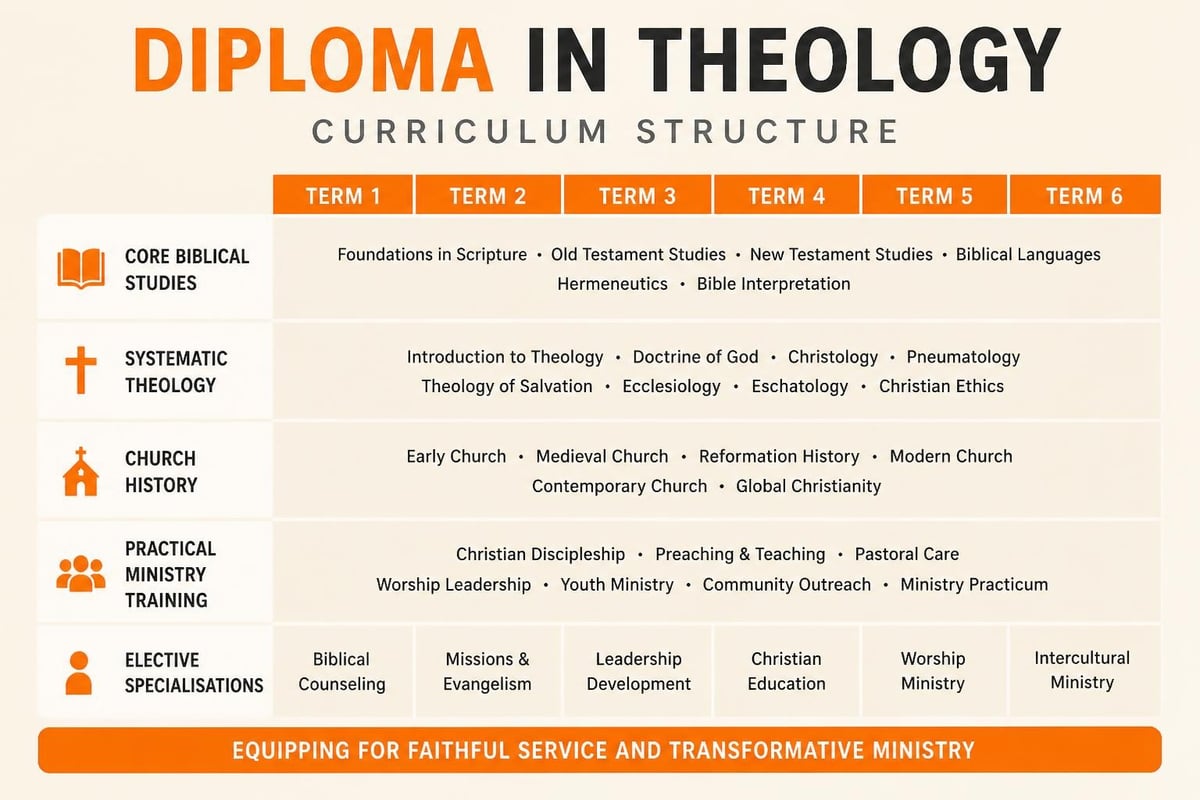
The structure varies across institutions, but most programmes include foundational studies in biblical interpretation, systematic theology, church history, and practical ministry applications. Unlike degree programmes that require extensive general education credits, theology diplomas concentrate specifically on theological content, making them ideal for focused learners.
Programme Duration and Commitment
Most institutions design diploma in theology programmes to accommodate various schedules and learning preferences. Full-time students typically complete requirements within one to two years, whilst part-time learners may extend their studies over three to four years.
The Diploma in Theological Studies at Central Seminary exemplifies this flexibility through its online format, allowing students to balance ministry responsibilities with academic pursuits. This adaptability proves particularly valuable for individuals already serving in church contexts who cannot relocate for residential programmes.
Time commitment considerations include:
- Weekly reading assignments ranging from 100 to 300 pages
- Written assignments totalling 2,000 to 5,000 words per module
- Potential field education or ministry practicum hours
- Examination preparation and assessment periods
- Optional residential intensives or workshops
Core Curriculum Components
The diploma in theology curriculum establishes a comprehensive foundation across multiple theological disciplines. Institutions design these programmes to equip students with both knowledge and practical competencies for effective ministry service.
Biblical Studies Foundation
Scripture forms the cornerstone of any reputable theology diploma. Students engage with both Old and New Testament books through exegetical methods that unlock original meanings whilst applying principles to contemporary contexts.
Hermeneutics courses teach proper interpretation techniques, helping students avoid common pitfalls in biblical understanding. These modules emphasise grammatical-historical interpretation, literary analysis, and responsible application methods that honour textual integrity.
| Biblical Studies Component | Focus Areas | Practical Application |
|---|---|---|
| Old Testament Survey | Law, Prophets, Writings | Understanding redemptive history |
| New Testament Survey | Gospels, Epistles, Revelation | Applying apostolic teaching |
| Hermeneutics | Interpretation principles | Sound sermon preparation |
| Biblical Languages (optional) | Hebrew, Greek foundations | Direct textual engagement |
Systematic Theology
Systematic theology organises biblical teaching into coherent doctrinal frameworks. Students explore essential Christian doctrines including theology proper, Christology, pneumatology, ecclesiology, and eschatology.
Newman Theological College's approach demonstrates how programmes integrate theological disciplines to deepen understanding of faith. This systematic approach enables students to articulate beliefs clearly and defend them biblically.
The practical value emerges when ministry leaders answer complex questions from congregants. Understanding systematic theology provides tools to address contemporary challenges whilst remaining anchored in historic Christian orthodoxy.
Church History and Traditions
Historical theology traces Christianity's development from apostolic times through contemporary movements. Students examine how the church has interpreted Scripture, responded to heresies, and adapted to cultural contexts across centuries.
This historical perspective proves invaluable for avoiding theological innovation that contradicts tested orthodoxy. Understanding historical debates about Trinity, Christology, and soteriology equips ministry leaders to recognise recurring errors in new packaging.
Key historical periods covered:
- Apostolic and Patristic era (AD 100-500)
- Medieval church developments (500-1500)
- Reformation and Counter-Reformation (1500-1700)
- Modern theological movements (1700-present)
- Contemporary global Christianity (1900-2026)
Practical Ministry Training
Whilst academic rigour remains essential, the diploma in theology distinguishes itself through practical ministry emphasis. Programmes integrate theoretical knowledge with hands-on experience that prepares students for real-world ministry contexts.
Homiletics and Preaching
Effective biblical communication stands central to pastoral ministry. Homiletics courses teach sermon construction, delivery techniques, and audience engagement strategies that make Scripture accessible and applicable.
Students develop skills in exegetical preaching that faithfully represents textual meaning whilst connecting with contemporary listeners. Practice opportunities with constructive feedback accelerate development beyond what self-study could achieve.
The Diploma in Biblical & Missional Theology emphasises this practical dimension, particularly valuable for individuals without prior college education who demonstrate ministry calling and competency.
Pastoral Counselling Foundations
Ministry leaders regularly encounter people facing life challenges requiring biblical guidance. Foundational counselling training equips students to provide appropriate support whilst recognising situations requiring specialised intervention.
For those seeking deeper counselling competencies, programmes like Level 1: Foundation in Biblical Counselling offer comprehensive training in biblical counselling principles and basic techniques that complement theological education beautifully.

Choosing the Right Programme
Selecting an appropriate diploma in theology requires careful consideration of multiple factors beyond curriculum content. Accreditation, denominational affiliation, delivery format, and institutional reputation all influence educational outcomes and ministry opportunities.
Accreditation Considerations
Accreditation ensures programmes meet recognised educational standards and that credits transfer appropriately. Regional and national accrediting bodies verify institutional integrity, academic quality, and financial stability.
Theological accreditation from bodies like the Association of Theological Schools (ATS) specifically validates theological education quality. Whilst not all diploma programmes carry ATS accreditation (typically reserved for graduate programmes), institutional accreditation remains crucial.
| Accreditation Type | Significance | Impact on Students |
|---|---|---|
| Regional | Broad educational standards | Credit transferability |
| National | Specialised institutional focus | Programme recognition |
| Theological | Specific ministry education | Ministry credential acceptance |
Denominational Alignment
Some theology diplomas maintain denominational affiliations that shape theological perspectives and ministry preparation. Understanding these affiliations helps ensure educational content aligns with your theological convictions and intended ministry context.
Virginia Theological Seminary's Diploma in Theology reflects Episcopal theological traditions, whilst other institutions emphasise Reformed, Wesleyan, Pentecostal, or non-denominational approaches. Neither option proves inherently superior - appropriateness depends on your ministry context and theological commitments.
Online Versus Residential Options
The rise of quality online education has democratised access to theological training. TCA College's Diploma in Theology exemplifies how institutions integrate theology with practical ministry skills through distance learning formats.
Online programme advantages:
- Geographical flexibility enabling global participation
- Continued ministry engagement during studies
- Reduced costs eliminating relocation expenses
- Self-paced learning accommodating various schedules
- Access to diverse faculty expertise
Residential programme benefits:
- Immersive theological community formation
- Direct faculty mentorship and interaction
- Structured accountability and peer learning
- Campus resource access including libraries
- Intensive focused study without competing demands
Career Pathways and Ministry Applications
A diploma in theology opens numerous ministry and service opportunities, though understanding realistic expectations prevents disappointment. This qualification rarely satisfies denominational ordination requirements alone but provides excellent foundation for further study or lay ministry roles.
Vocational Ministry Roles
Many diploma graduates serve effectively in pastoral assistant positions, youth ministry, missions work, or parachurch organisations. The focused theological training equips them for teaching, discipleship, and ministry coordination responsibilities.
Church planting contexts particularly value theology diploma graduates who combine biblical knowledge with entrepreneurial ministry vision. Smaller congregations often benefit from theologically trained leaders even without full seminary credentials.
Educational Ministry
Christian education contexts including Sunday schools, Bible colleges, and discipleship programmes seek leaders with solid theological foundations. Diploma in theology graduates possess the systematic biblical knowledge necessary for effective teaching ministry.
The Master's Seminary outlines how diploma programmes prepare graduates for various ministry paths including continued academic pursuit. Many students complete diplomas as stepping stones toward degree programmes, with some credits potentially transferring.
Marketplace Ministry
Bi-vocational ministry models increasingly characterise contemporary church life. Theology diploma graduates combine secular employment with meaningful church service, applying theological insights across professional contexts.
This approach enables ministry influence beyond traditional church boundaries whilst maintaining financial sustainability. The focused nature of diploma studies makes this dual commitment more manageable than full degree programmes.

Financial Considerations and Funding Options
Theological education represents a significant investment requiring careful financial planning. Understanding costs and available funding sources helps prospective students make sustainable decisions aligned with their circumstances.
Programme Costs
Diploma in theology fees vary considerably across institutions, delivery formats, and geographical locations. Online programmes typically cost less than residential options, eliminating housing and relocation expenses whilst maintaining educational quality.
Typical cost components include:
- Tuition fees per credit hour or semester
- Technology fees for online platform access
- Textbooks and required reading materials
- Registration and administrative charges
- Optional residential intensive costs
Funding Sources
Many theological institutions recognise ministry students' financial constraints and offer various support mechanisms. Exploring all options maximises affordability without compromising educational quality.
Denominational scholarships frequently support members pursuing theological education aligned with their tradition. Church sponsorships enable congregations to invest in developing their members' ministry capacities, creating mutually beneficial partnerships.
External scholarships from Christian foundations and ministry organisations provide additional funding possibilities. Part-time study options allow students to maintain employment whilst gradually completing requirements, spreading costs over extended periods.
Academic Progression Opportunities
The diploma in theology frequently serves as foundation for further theological study rather than terminal qualification. Understanding progression pathways helps students plan long-term educational journeys strategically.
Bridging to Degree Programmes
Many institutions design diploma in theology programmes with intentional pathways toward bachelor's degrees in theology or divinity. Vancouver School of Theology's programme demonstrates this approach, offering theological enrichment whilst preparing students for potential degree completion.
Credit transfer policies vary significantly between institutions. Some universities accept substantial diploma credits toward degree requirements, whilst others require extensive additional coursework. Investigating transfer agreements before enrolment prevents disappointment and wasted effort.
Professional Certification Paths
Certain specialised ministry certifications accept theology diplomas as foundational requirements. Chaplaincy endorsements, counselling certifications, and missions agency qualifications often recognise diploma credentials when combined with practical experience.
Students interested in specific ministry contexts should research credential requirements early, ensuring their diploma programme aligns with professional goals. This strategic approach maximises educational investment efficiency.
Spiritual Formation and Community
Beyond academic content, quality diploma in theology programmes emphasise spiritual formation and community development. Theological education divorced from spiritual growth produces knowledgeable but ineffective ministry leaders.
Formational Practices
Integrated spiritual disciplines including prayer, Scripture meditation, worship, and accountability relationships form the relational context where theological knowledge transforms into wisdom. Programmes incorporating formational practices produce graduates who embody truths they proclaim.
Mentorship relationships with experienced ministry leaders provide invaluable guidance navigating theological study's challenges. These connections often continue beyond graduation, forming ministry networks supporting long-term effectiveness.
Learning Communities
Alpha Bible College emphasises how theology diplomas impart foundational knowledge whilst fostering supportive learning communities. Fellow students become ministry colleagues, prayer partners, and lifelong friends sharing common calling and commitment.
Virtual learning communities prove equally valuable in online contexts. Discussion forums, video conferencing, and collaborative projects create connection despite geographical separation, demonstrating how technology enables meaningful theological education community.
Global Perspectives in Theological Education
Contemporary diploma in theology programmes increasingly incorporate global Christianity perspectives, recognising the faith's worldwide nature and multicultural expressions. This broadened vision equips graduates for ministry in diverse, interconnected contexts.
Contextual Theology
Understanding how Christians in different cultures interpret and apply Scripture enriches theological comprehension. African, Asian, and Latin American theological perspectives offer insights often overlooked in Western-dominated theological education.
Exposure to global theological voices prevents cultural Christianity where tradition receives unwarranted authority over Scripture. This critical awareness enables ministry leaders to distinguish biblical essentials from cultural preferences, fostering healthier churches.
Cross-Cultural Ministry Preparation
Migration patterns and globalisation mean most ministry contexts now involve cross-cultural dynamics. Theology diplomas preparing students for this reality include missiology, cultural anthropology, and intercultural communication components.
These competencies prove valuable whether serving internationally or ministering within increasingly diverse local communities. Understanding worldview differences and communication barriers prevents misunderstandings whilst enabling more effective gospel witness.
Balancing Academic Rigour and Accessibility
The diploma in theology occupies a unique educational space, maintaining academic standards whilst remaining accessible to non-traditional students. This balance enables broader participation in theological education without compromising quality.
Entry Requirements
Unlike degree programmes requiring specific academic prerequisites, many theology diplomas welcome students from diverse educational backgrounds. Seminary of the Southwest's programme illustrates how institutions structure requirements to accommodate various preparation levels.
Some programmes require secondary education completion, whilst others assess readiness through interviews, writing samples, or prerequisite courses. This flexibility enables mature students with ministry experience but limited formal education to pursue theological training.
Academic Support Services
Recognising diverse student preparation, quality programmes provide academic support including writing assistance, study skills development, and theological foundations workshops. These services level the playing field, enabling all students to succeed regardless of prior educational experience.
Library resources, research databases, and online tutorials equip students for theological research and writing. Learning these skills proves valuable throughout ministry careers, enabling continued growth and development beyond formal studies.
A diploma in theology provides accessible, focused biblical education that equips believers for more effective ministry service and deeper spiritual understanding. Whether you're exploring ministry calling, seeking to serve your congregation more capably, or desiring systematic theological knowledge, this qualification offers practical pathways toward these goals. MyFiladelfia Skills Development Provider empowers believers through comprehensive biblical education and training within a supportive community of learners passionate about growing spiritually and developing practical ministry skills that positively influence communities with God's truth and love.