Online Theology Degree: Transform Your Ministry Calling
· MyFiladelfia

The landscape of theological education has undergone a remarkable transformation in recent years, making advanced biblical study accessible to believers worldwide. An online theology degree offers aspiring ministry leaders, counsellors, and educators the opportunity to pursue rigorous academic training without sacrificing their current commitments to family, work, or local church service. This flexible approach to theological education combines scholarly depth with practical ministry application, preparing students to serve their communities with both intellectual competence and spiritual maturity. Whether you're sensing a call to pastoral ministry, biblical counselling, or lay leadership, understanding the scope and value of online theological programmes can help you make an informed decision about your educational journey.
The Structure and Scope of Online Theological Education
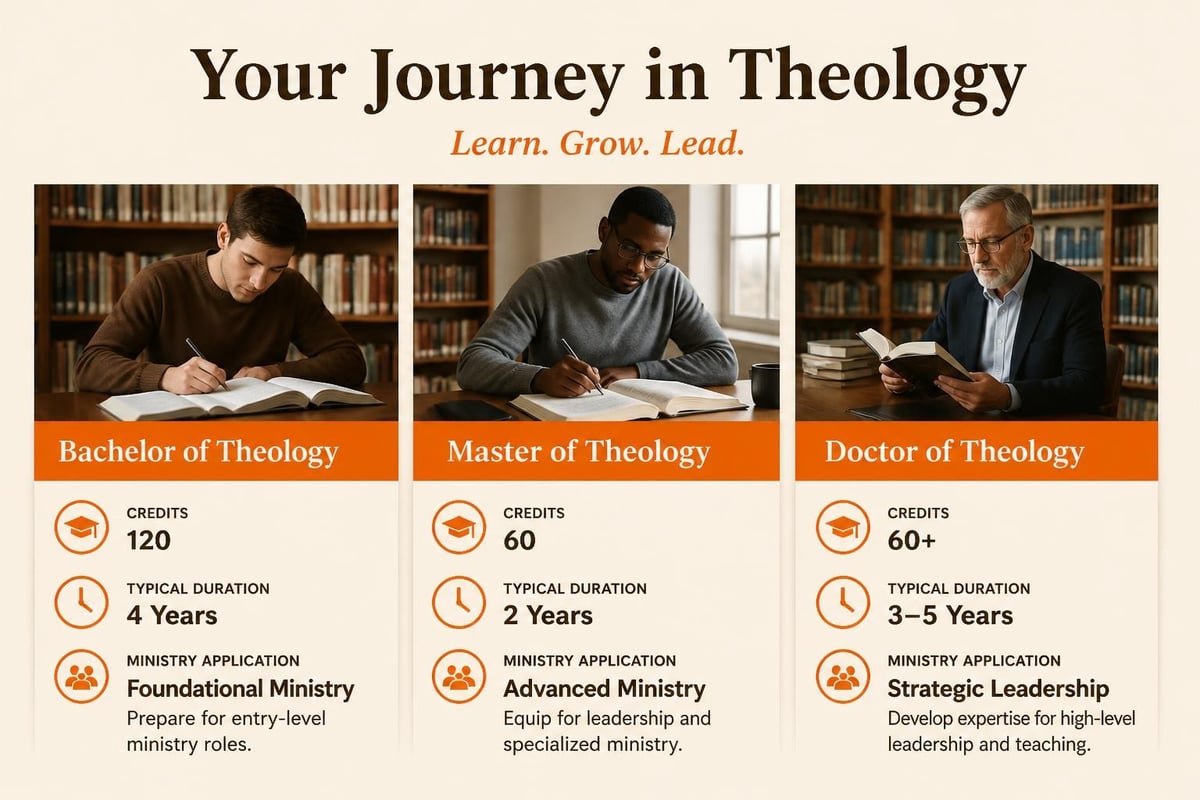
Online theology degree programmes span multiple academic levels, each designed to meet specific educational and ministry goals. The foundational undergraduate degree typically requires 120 credit hours of study, whilst master's programmes demand between 36 and 60 credits depending on specialization. Doctoral programmes represent the pinnacle of theological education, requiring extensive research and original contribution to the field.
Degree levels available through online formats include:
- Bachelor of Arts or Science in Theology (3-4 years)
- Master of Divinity (M.Div.) for pastoral preparation (2-3 years)
- Master of Arts in Theological Studies (1-2 years)
- Master of Arts in Biblical Counselling or Specialized Ministry (1-2 years)
- Doctor of Ministry (D.Min.) for advanced practitioners (3-5 years)
- Doctor of Philosophy (Ph.D.) in Theology or Biblical Studies (4-6 years)
The curriculum structure typically integrates core biblical studies with systematic theology, church history, and practical ministry training. Students engage with original biblical languages including Greek and Hebrew, explore theological traditions from early church fathers through contemporary scholars, and develop practical skills in preaching, teaching, and pastoral care. Many programmes, such as Liberty University's online theology degrees, offer specializations that allow students to focus on areas like missions, worship leadership, or youth ministry.
Core Components of a Comprehensive Theology Programme
Every robust online theology degree builds upon essential disciplines that form the bedrock of theological understanding. Biblical studies courses examine Scripture book by book, employing historical-critical methods alongside devotional approaches. Systematic theology organizes Christian doctrine into coherent frameworks, addressing topics from the nature of God to eschatology.
| Discipline | Focus Areas | Practical Application |
|---|---|---|
| Biblical Studies | Old Testament, New Testament, Hermeneutics | Sermon preparation, Teaching ministry |
| Systematic Theology | Theology Proper, Christology, Pneumatology | Doctrinal clarity, Apologetics |
| Church History | Early Church, Reformation, Modern Church | Understanding tradition, Contextual ministry |
| Practical Theology | Homiletics, Pastoral Care, Leadership | Direct ministry skills, Counselling foundations |
Historical theology traces the development of Christian thought across two millennia, providing context for contemporary theological discussions. Students discover how the church has wrestled with doctrinal questions throughout history, learning from both triumphs and mistakes. This historical perspective proves invaluable when addressing modern challenges in ministry contexts.
Practical theology bridges the gap between academic study and lived ministry experience. Courses in this area address preaching, worship design, educational methods, and pastoral counselling. The Foundation in Biblical Counselling approach exemplifies how theological education integrates biblical principles with practical techniques, equipping students to minister effectively to people facing real-world struggles.
Choosing the Right Online Theology Programme
Selecting an appropriate online theology degree requires careful evaluation of several critical factors. Accreditation stands as the foremost consideration, ensuring your degree meets recognized academic standards and qualifies you for ministry credentials. Regional accreditation demonstrates general academic quality, whilst specialized theological accreditation from bodies like the Association of Theological Schools (ATS) confirms programme excellence within the field.
Key selection criteria include:
- Accreditation status from recognized bodies
- Denominational alignment with your theological tradition
- Faculty credentials and active ministry involvement
- Course delivery methods (asynchronous, synchronous, or hybrid)
- Residency requirements for intensive on-campus experiences
- Cost and financial aid availability
- Graduate outcomes and ministry placement rates
Denominational affiliation significantly influences theological emphasis and ministry preparation. Franciscan University of Steubenville's online BA in Theology reflects Catholic theological tradition, whilst other institutions offer Reformed, Wesleyan, Pentecostal, or non-denominational perspectives. Understanding how a programme's theological stance aligns with your convictions ensures coherent spiritual formation.
Evaluating Programme Flexibility and Support
The quality of online learning infrastructure directly impacts your educational experience. Superior programmes provide robust learning management systems, interactive course materials, and regular faculty engagement. Asynchronous courses allow students to complete work on their own schedule, whilst synchronous elements create community through live video sessions.
Support services distinguish exceptional programmes from merely adequate ones. Academic advising helps students navigate degree requirements and course sequencing. Technical support addresses platform difficulties promptly. Library access to theological databases and resources proves essential for research assignments. Career services assist with ministry placement and credential applications.
Some institutions require brief on-campus residencies, creating opportunities for intensive study, relationship building, and hands-on ministry training. Loyola University New Orleans's Bachelor of Arts in Ministry and Theology balances online convenience with these formative in-person experiences. These residencies often become highlights of the educational journey, fostering lasting connections with fellow students and faculty mentors.

The Academic Journey: What to Expect
Pursuing an online theology degree demands intellectual rigor comparable to traditional on-campus programmes. Students engage original source materials, write research papers employing proper theological method, and participate in substantive discussions with classmates from diverse backgrounds. The asynchronous format requires strong self-discipline and time management skills.
Weekly workload typically ranges from 10 to 15 hours per three-credit course. Readings include both assigned textbooks and primary sources from theological classics. Discussion forums facilitate peer interaction, with students responding to prompts and engaging classmates' perspectives. Written assignments progress from short reflection papers to extensive research projects requiring proper citation of theological sources.
Language Studies and Biblical Exegesis
Many online theology degree programmes require at least introductory biblical language study. Greek courses enable direct engagement with the New Testament text, revealing nuances lost in translation. Hebrew study unlocks the Old Testament in its original form. While initially challenging, language study profoundly enriches biblical understanding and preaching preparation.
Exegetical methods courses teach students to analyze Scripture systematically. These skills prove invaluable for sermon preparation, Bible study leadership, and ministry decision-making. Students learn to identify literary genres, understand historical contexts, trace theological themes, and apply interpretive principles consistently. Corban University's online Biblical and Theological Studies degree emphasizes these foundational exegetical competencies.
Research methodology courses prepare students for advanced academic work. Proper theological research employs specialized databases, evaluates sources critically, and engages scholarly conversation responsibly. Students discover how to formulate research questions, conduct literature reviews, and construct coherent theological arguments supported by evidence.
Career Pathways and Ministry Applications
An online theology degree opens diverse ministry and vocational opportunities. Traditional pastoral ministry remains a primary pathway, with graduates serving as lead pastors, associate ministers, or church planters. Denominational credentials typically require specific degree levels-many denominations mandate a Master of Divinity for ordination.
Ministry career paths include:
- Pastoral ministry in local church settings
- Chaplaincy in hospitals, military, prisons, or universities
- Missions work domestically and internationally
- Biblical counselling and spiritual direction
- Christian education and curriculum development
- Nonprofit leadership in faith-based organizations
- Academic teaching in Christian schools or seminaries
Parachurch organizations employ theology graduates in various capacities. Campus ministries, youth organizations, and mission agencies seek individuals with solid theological foundations and practical ministry skills. These roles often require the theological depth that only formal degree programmes provide.

| Career Path | Typical Degree Level | Additional Requirements |
|---|---|---|
| Senior Pastor | M.Div. or equivalent | Denominational ordination |
| Biblical Counsellor | M.A. in Counselling | Professional certification |
| Seminary Professor | Ph.D. | Published research |
| Chaplain | M.Div. preferred | Clinical pastoral education |
| Missions Director | M.A. minimum | Cross-cultural experience |
Educational ministry represents another significant avenue. Theology graduates serve as Christian school teachers, Sunday school coordinators, and curriculum developers. Some pursue academic careers, teaching in Bible colleges or seminaries after completing doctoral studies. LeTourneau University's Bachelor of Biblical Studies and Ministry prepares students for these diverse educational roles.
Integrating Theological Education with Current Ministry
One significant advantage of an online theology degree involves the ability to apply learning immediately within current ministry contexts. Students serving in churches can implement new insights from systematic theology courses in teaching ministries. Lessons from church history inform contemporary leadership decisions. Practical theology courses enhance existing ministry effectiveness.
This integration creates a feedback loop between classroom and ministry field. Theoretical concepts gain clarity through practical application, whilst ministry challenges raise questions that deepen theological inquiry. Many programmes design assignments to encourage this integration, asking students to reflect on how course content addresses real ministry situations.
Balancing Study, Ministry, and Personal Life
Successfully completing an online theology degree whilst maintaining ministry involvement and family responsibilities requires intentional planning. Effective students establish regular study schedules, communicate expectations with family members, and protect designated study time. Time management skills developed during theological education serve ministry leaders throughout their careers.
Support from local church leadership proves invaluable. Many congregations recognize theological education as ministry development, adjusting responsibilities to accommodate study demands. Some churches provide financial assistance or study leave for intensive courses. This partnership between student, educational institution, and local church creates optimal conditions for formation and growth.
Spiritual formation remains central throughout theological education. Academic study can become dry intellectual exercise unless paired with consistent spiritual disciplines. Prayer, worship, Scripture meditation, and Christian community sustain students through challenging coursework and prevent knowledge from disconnecting from devotion. Saint Leo University's Master's Degree in Theology emphasizes this integration of academic excellence with spiritual vitality.
Financial Considerations and Funding Options
The cost of an online theology degree varies considerably across institutions. Tuition rates range from approximately £200 to £800 per credit hour, with entire degree programmes costing between £15,000 and £60,000. Understanding total programme cost, including fees, textbooks, and technology requirements, enables realistic financial planning.
Funding sources to explore:
- Institutional scholarships based on merit or financial need
- Denominational grants for ministry candidates
- Church sponsorship programmes
- Ministry employer tuition assistance
- Government student loans and grants
- Private educational loans with competitive rates
- Personal savings and family contributions
Many theological institutions offer generous financial aid packages specifically for ministry students. Seminary scholarships often consider ministry calling and potential alongside academic achievement. Some denominations maintain scholarship funds for members pursuing theological education for ministry service.
Employer tuition benefits apply when students work for churches, Christian schools, or ministry organizations. These programmes typically cover partial or full tuition costs in exchange for continued service commitment. Ministry employers recognize theological education enhances staff effectiveness and leadership capacity.
Technology and Online Learning Platforms
Modern online theology degree programmes leverage sophisticated educational technology to create engaging learning experiences. Learning management systems organize course content, facilitate discussions, manage assignments, and track progress. Video conferencing enables live class sessions, small group interactions, and individual faculty consultations.
Digital library resources provide 24/7 access to theological journals, books, and research databases. Students access the same scholarly materials available to on-campus students, removing geographical barriers to academic resources. Biblical software platforms support language study and exegetical work, offering parsing tools, lexicons, and comparative translations.
Multimedia content enriches theological education beyond text-based learning. Video lectures from distinguished scholars, documentary resources on church history, virtual tours of biblical archaeological sites, and recorded worship experiences from diverse traditions expand educational horizons. Saint Joseph's College of Maine's theology programs exemplify effective use of varied multimedia approaches.
| Technology Type | Educational Function | Student Benefit |
|---|---|---|
| Learning Management System | Course organization and delivery | Centralized access to all materials |
| Video Conferencing | Live interaction and lectures | Real-time engagement with faculty and peers |
| Digital Libraries | Research and resource access | Comprehensive scholarly materials available anywhere |
| Biblical Software | Language study and exegesis | Professional-grade tools for biblical analysis |
| Discussion Forums | Asynchronous peer interaction | Thoughtful engagement across time zones |
The Global Perspective in Online Theological Education
Online theology degree programmes attract students from diverse cultural, denominational, and geographical backgrounds. This diversity enriches theological dialogue, exposing students to perspectives beyond their local contexts. Classroom discussions benefit from varied interpretations, ministry experiences, and cultural insights that broaden theological understanding.
Global accessibility democratizes theological education, enabling believers in regions with limited seminary access to pursue rigorous training. Students in remote areas, developing nations, or locations with political restrictions can engage theological study previously unavailable to them. This expansion fulfills the mission of equipping believers worldwide for effective ministry.
Cross-cultural competency develops naturally through online theological education. Students encounter classmates ministering in vastly different contexts, learning how the gospel addresses unique cultural challenges. This exposure prepares graduates for increasingly multicultural ministry environments and global mission opportunities. Corban University's online programs emphasize this global dimension of contemporary theological education.
International students bring fresh perspectives on familiar biblical texts and theological questions. Western students discover interpretations shaped by African, Asian, or Latin American contexts. This dialogue mirrors the early church's expansion across cultural boundaries, demonstrating Christianity's essential unity amid contextual diversity.
Quality Assurance and Academic Rigor
Reputable online theology degree programmes maintain academic standards equivalent to residential programmes. Faculty hold terminal degrees from recognized institutions and engage ongoing scholarship through research and publication. Course content undergoes regular review to ensure theological accuracy, pedagogical effectiveness, and ministry relevance.
Assessment methods in online theology programmes employ various strategies to evaluate learning comprehensively. Traditional research papers measure analytical thinking and theological argumentation. Exams test content mastery and conceptual understanding. Ministry project assignments evaluate practical application skills. Discussion participation demonstrates engagement with course material and peers.
Academic integrity remains paramount in online education. Institutions employ plagiarism detection software, proctored examinations, and original work verification processes. These measures protect degree value whilst teaching students ethical scholarship practices essential for ministry credibility. Theological education must model the integrity it calls students to embody.
Continuous improvement processes ensure online theology degree programmes remain current and effective. Student evaluations inform course refinements. Advisory boards comprising ministry practitioners provide feedback on graduate preparedness. Accreditation reviews impose external accountability for maintaining educational excellence.
Pursuing an online theology degree represents a significant investment in your spiritual development and ministry effectiveness, combining academic rigor with practical application in ways that transform both understanding and service. Whether you're beginning your theological education journey or advancing to specialized study, online programmes offer flexible pathways to deeper biblical knowledge and enhanced ministry competency. At MyFiladelfia Skills Development Provider, we're committed to empowering believers through thorough biblical education and counselling training, nurturing the next generation of ministry leaders who will positively influence their communities with God's truth and love. Explore how our supportive learning community can help you develop the theological foundations and practical skills needed for faithful, effective ministry by visiting MyFiladelfia Skills Development Provider today.